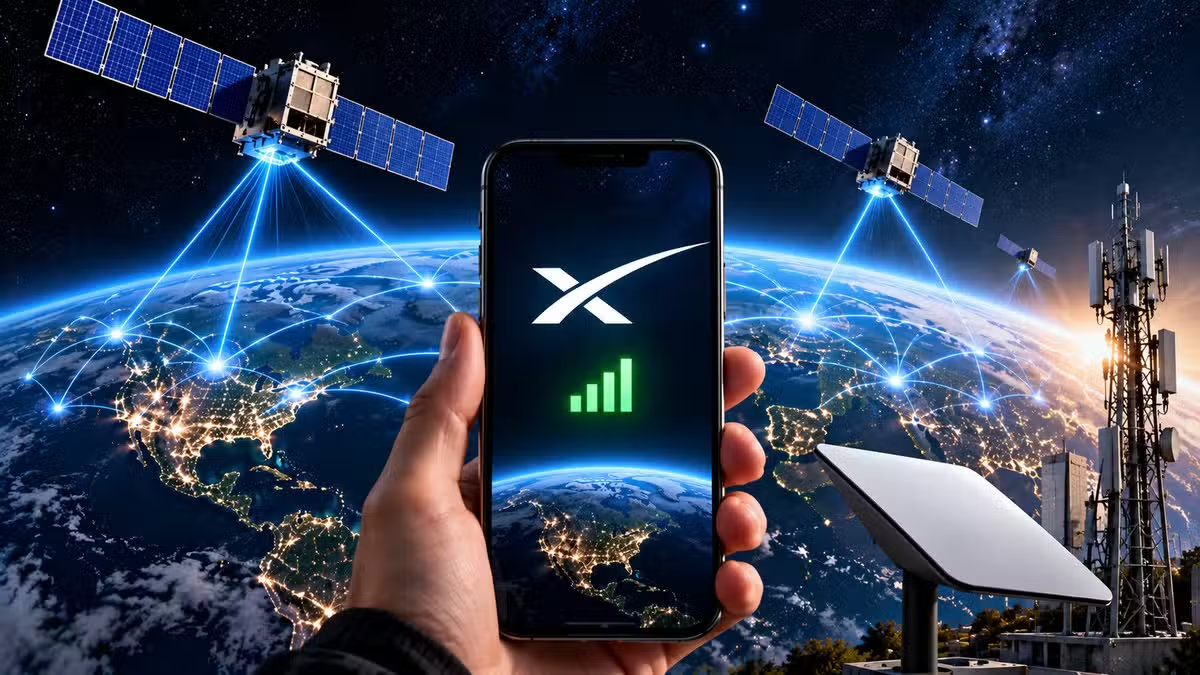
SpaceX is taking another major step toward becoming a full telecommunications network provider after acquiring up to 14 MHz of paired spectrum in the 800 MHz band across the United States from Grain Management. The deal strengthens the company’s Starlink mobile ambitions and could help expand cellular connectivity beyond traditional mobile networks.
The acquisition adds an important piece to SpaceX’s growing wireless infrastructure. By combining satellite-based connectivity with terrestrial spectrum, the company aims to improve phone coverage in areas where conventional cellular networks struggle to deliver reliable service.
Elon Musk described the acquisition as the “last critical piece of the spectrum puzzle” required for SpaceX to provide comprehensive phone coverage across America. The development highlights the company’s broader strategy of building a communications network that can connect users in more locations, including places with limited cellular infrastructure.
SpaceX’s plans could also increase competition in the telecommunications industry, where mobile operators have traditionally relied on networks of ground-based towers to deliver wireless services.
How Starlink Satellites and 800 MHz Spectrum Could Work Together
SpaceX intends to use Starlink satellites to provide mobile connectivity outdoors, particularly in locations where traditional cellular coverage is weak or unavailable. Satellite connectivity can help extend communication services to remote communities, rural highways and other areas beyond the reach of conventional mobile infrastructure.
However, satellite signals face challenges when users move indoors. Buildings, walls and other physical obstacles can weaken wireless signals, making it more difficult to maintain a reliable connection inside homes, offices and commercial properties.
The newly acquired 800 MHz spectrum could help SpaceX address this challenge. Lower-frequency wireless signals generally travel farther and penetrate buildings more effectively than higher-frequency signals, making the 800 MHz band valuable for improving coverage in indoor environments.
By combining satellite connectivity with access to lower-frequency spectrum, SpaceX could develop a more flexible network capable of supporting users in different settings. The approach would allow the company to use satellite technology where ground infrastructure is limited while leveraging terrestrial wireless capabilities to improve coverage where needed.
The effectiveness of this strategy will depend on network design, spectrum deployment, device compatibility and regulatory approvals. Spectrum ownership alone does not automatically guarantee seamless indoor coverage or nationwide mobile service.
Why the Spectrum Acquisition Matters for Starlink
Spectrum is a critical resource for telecommunications companies because it determines which radio frequencies can be used to transmit wireless signals. Access to suitable spectrum can improve coverage, support network expansion and help operators develop new services.
For SpaceX, securing additional spectrum could strengthen its position in the growing market for satellite-to-phone connectivity. The company has been working to make satellite communication more accessible to ordinary smartphone users, reducing the need for specialized satellite phones or dedicated equipment for supported services.
Traditional mobile networks depend heavily on cellular towers, fiber connections and other ground-based infrastructure. Although these systems provide strong coverage in populated areas, building and maintaining networks across remote regions can be expensive.
Starlink satellites offer a different approach by delivering connectivity from space. Combining satellite technology with additional wireless spectrum could help SpaceX address some of the limitations associated with relying on satellites alone.
The acquisition also reflects a wider shift in the telecommunications industry, where satellite operators and traditional mobile carriers are increasingly exploring ways to combine their technologies.
What the Deal Could Mean for Mobile Users
If SpaceX successfully integrates the newly acquired spectrum into its network strategy, mobile users could eventually benefit from more consistent connectivity in locations where conventional coverage is unreliable.
Potential applications include maintaining communication while traveling through rural areas, accessing supported services in remote locations and improving wireless connectivity in places where cellular signals are weak.
Indoor connectivity is another important consideration. Many users expect their phones to work reliably inside buildings, but signal quality can vary significantly depending on construction materials, building layouts and network coverage. The 800 MHz band could provide an additional tool for addressing these limitations.
However, consumers should not expect immediate changes simply because SpaceX has acquired spectrum. Expanding a mobile network requires technical development, compatible devices, partnerships where necessary and compliance with applicable telecommunications regulations.
The availability of specific services will also depend on how SpaceX deploys the spectrum and which mobile devices can connect to its network.
SpaceX’s Growing Ambitions in the Telecommunications Industry
SpaceX has built Starlink into a major satellite internet platform, but its longer-term ambitions extend beyond providing broadband connections to homes and businesses. Direct-to-device connectivity could allow the company to become a more significant participant in the mobile communications market.
The latest spectrum acquisition strengthens that ambition by adding another potential component to its network infrastructure. Rather than relying exclusively on satellites or conventional cellular technology, SpaceX is pursuing a model that combines different connectivity methods.
This strategy could challenge established assumptions about how mobile networks are built and operated. It may also encourage traditional telecom companies to accelerate their own satellite partnerships and explore new approaches to extending coverage.
For the broader industry, the key question is whether satellite operators can deliver reliable, affordable and widely available mobile services at a scale that competes with established cellular networks.
SpaceX’s acquisition of 800 MHz spectrum from Grain Management marks a significant development in that effort. By bringing satellite coverage and terrestrial wireless capabilities closer together, the company is positioning Starlink for a larger role in the future of mobile communications.