Google has unveiled Gemma 4, a groundbreaking set of open-source AI models designed for advanced reasoning, coding, and multimodal tasks. This launch represents a major leap in AI development, providing developers with tools capable of tackling complex workflows efficiently.
Gemma 4 is a next-generation suite of AI-powered models that can generate code, process images and videos, and execute sophisticated real-world workflows. Google positions Gemma 4 as “purpose-built for advanced reasoning and agentic workflows,” claiming unmatched intelligence-per-parameter compared to existing models. Since the original Gemma launch, over 400 million downloads have created a vast “Gemmaverse” of more than 100,000 model variants.
The Gemma 4 family includes four model sizes tailored for different needs: Effective 2B (E2B) and Effective 4B (E4B) optimized for memory and compute efficiency, the 26B Mixture of Experts (MoE) for high-end reasoning tasks, and the 31B Dense model, which ranks third among open models on the Arena AI leaderboard. Google says these models outperform others up to 20 times their size, thanks to advanced architecture and technology.
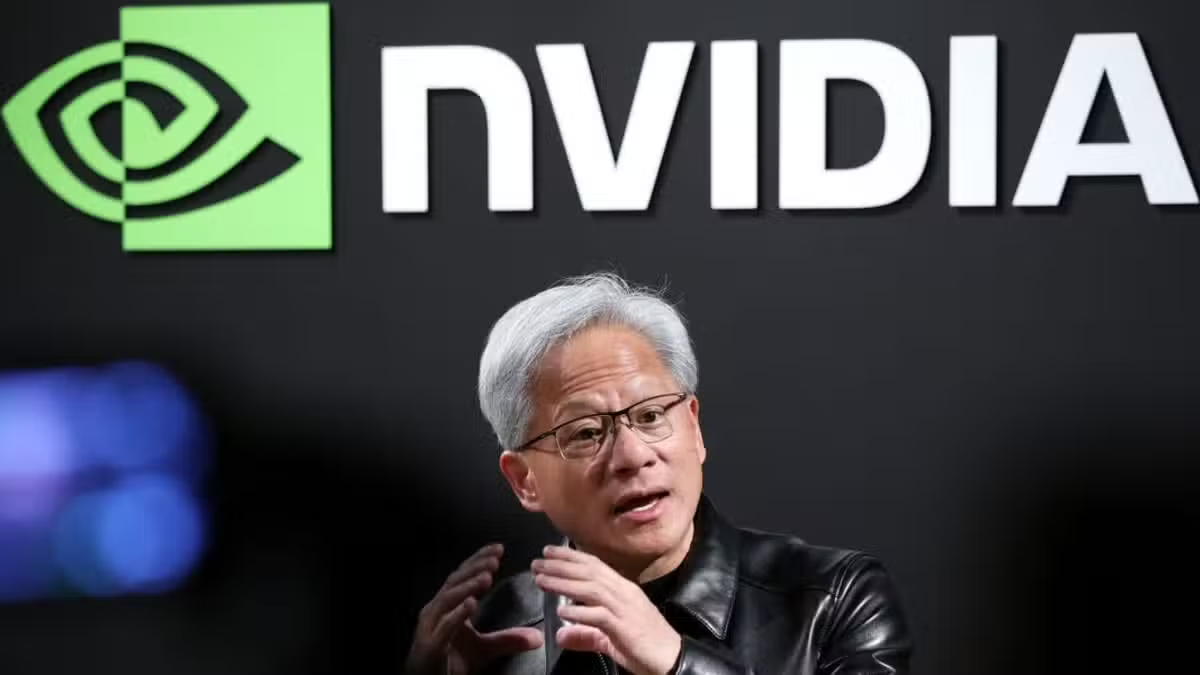
Efficiency and compatibility are central to Gemma 4. The larger models (26B and 31B) can run on standard PCs, with unquantized bfloat16 weights fitting a single 80 GB Nvidia H100 GPU. The smaller E2B and E4B models are optimized for low-power devices such as smartphones, Raspberry Pi, and Nvidia Jetson Orin Nano, making deployment highly versatile without sacrificing performance.
Gemma 4’s multimodal capabilities and agentic workflow support mark a shift toward highly capable, open-source AI tools. Developers, researchers, and AI enthusiasts can use these models to automate decision-making, streamline complex tasks, and advance research across multiple domains. With this launch, Google reinforces its commitment to making powerful, accessible AI solutions that bridge the gap between research and real-world applications.