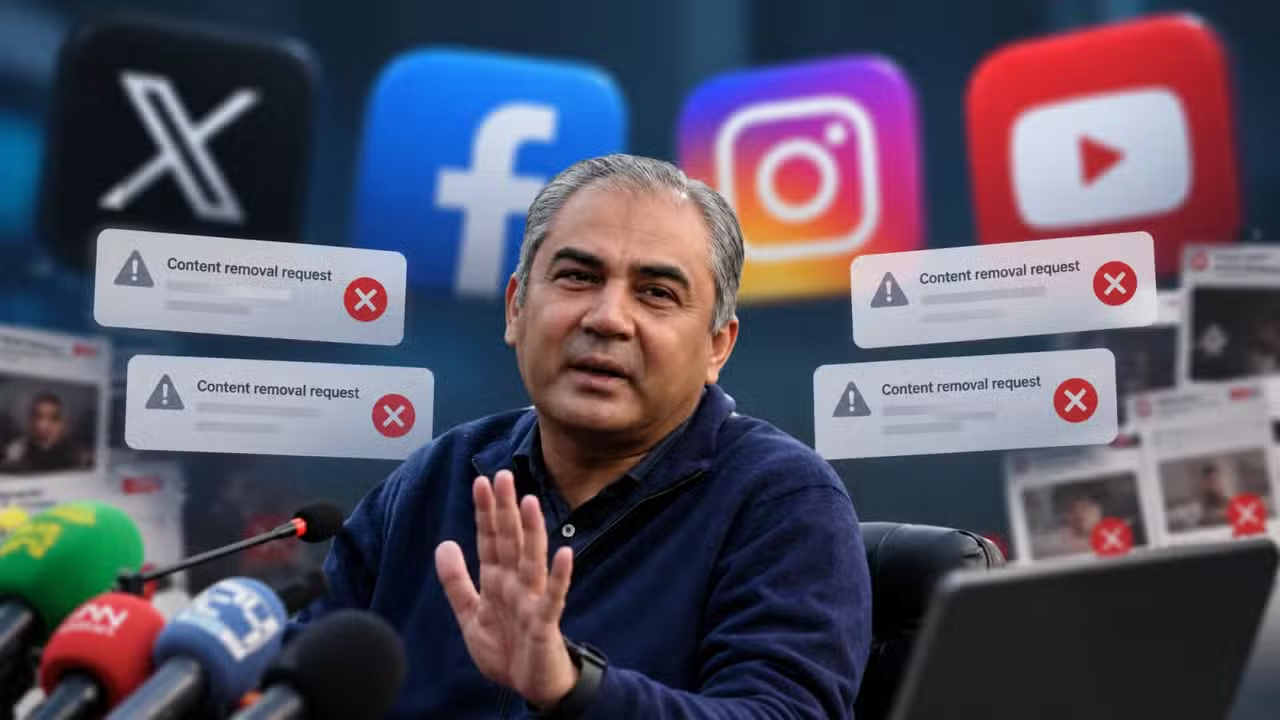
Pakistan’s Interior Minister Mohsin Naqvi has acknowledged shortcomings in efforts to curb extremist content on social media, revealing that online platforms complied with less than half of the removal requests submitted by Pakistani authorities.
In a written response to the National Assembly, Naqvi shared figures showing different compliance rates for requests submitted by the Pakistan Telecommunication Authority (PTA) and provincial Counter-Terrorism Departments (CTDs). The figures highlight the challenges authorities face in getting social media companies to act on reported content.
According to the minister’s reply, social media companies complied with only 23.7 percent of requests submitted by the PTA. The compliance rate for requests made by CTDs was higher, standing at 47.1 percent.
The figures indicate that most requests submitted through the PTA were not complied with, while CTD requests also received responses resulting in compliance in fewer than half of cases. However, the available information does not specify the total number of requests submitted by each authority or the period covered by the figures.
The disclosure comes amid ongoing efforts by Pakistani authorities to address extremist material and other content they consider harmful to public safety. Social media platforms have become important channels for communication and information sharing, while governments worldwide continue to debate how online material should be monitored and regulated.
In Pakistan, the PTA plays a central role in telecommunications regulation and the implementation of applicable rules governing online services. Counter-Terrorism Departments also work to address security threats, including material that authorities believe may be connected to extremist activity.
Requests to remove online content can involve different procedures, depending on the platform, the nature of the material, and the legal basis cited by the requesting authority. Social media companies may assess reports under their own community standards, applicable laws, and internal review processes.
The compliance figures shared in the National Assembly provide a measure of how often platforms acted on requests from the two categories of Pakistani authorities. However, the percentages alone do not explain why particular requests were accepted or rejected, or whether the remaining cases were pending review.
The distinction is important because a request for content removal does not automatically establish that the reported material violated a platform’s rules or applicable law. Assessing the effectiveness of such requests also requires information about their legal grounds, the type of content involved, and the outcome of any review or appeal.
The figures may prompt further discussion about cooperation between Pakistani authorities and international technology companies. Governments often seek faster responses to content they consider linked to security threats, while platforms must also assess requests against relevant laws and their policies.
Naqvi’s written reply acknowledges that current efforts to curb extremist content on social media have not achieved full compliance with government requests. The disclosed percentages offer a clearer picture of the reported response rates, although additional details would be needed to assess the overall effectiveness of the process.
Greater transparency about the number of requests submitted, the categories of content reported, and the reasons for decisions could help clarify how the system operates. Such information would also allow the public to better understand how authorities and technology companies handle online content concerns.
The National Assembly disclosure highlights a continuing challenge for Pakistan’s online content regulation efforts: securing platform cooperation while ensuring that content moderation decisions follow applicable legal requirements and established review procedures.
With reported compliance standing at 23.7 percent for PTA requests and 47.1 percent for CTD requests, the figures underscore the gap between the requests submitted by Pakistani authorities and the requests with which social media companies reportedly complied.