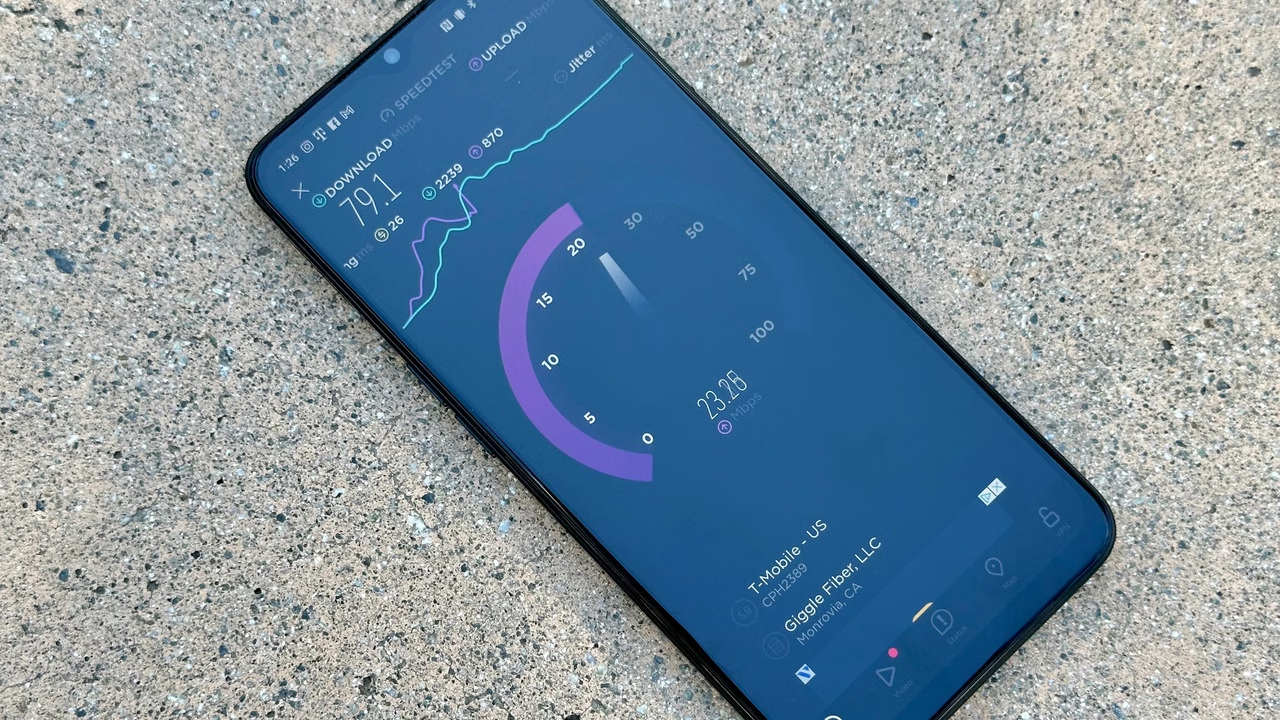
Pakistan’s early 5G network rollout is showing promising performance, with users recording an average download speed of 127.74 megabits per second (Mbps) during the second quarter of 2026.
The figures were reported in the Pakistan Telecommunication Authority’s (PTA) Mobile Network Experience Benchmarking Report, which provides an overview of mobile network performance during the period.
According to the report, the average 5G upload speed in Pakistan stood at 12.7 Mbps during the second quarter. The data provides an early indication of how 5G services are performing as the technology begins expanding across the country’s mobile network infrastructure.
The report also assessed users’ experience while watching videos and playing online games. Pakistan’s average video experience score was recorded at 67.33 out of 100.
Meanwhile, the average games experience score reached 62.05 out of 100. These measurements provide additional insight into network performance beyond basic download and upload speeds.
Download speed is particularly important for activities such as browsing websites, downloading files, streaming high-quality videos and using data-intensive applications. The reported average of 127.74 Mbps represents the measured performance of early 5G testing during the quarter.
Upload speed is relevant for activities including video calls, uploading photographs and videos, sending large files and other applications that require data to be transmitted from a user’s device to the network.
The video experience score offers another way of assessing mobile connectivity. A network’s performance during video streaming can be affected by several factors, including connection quality, network congestion and the ability of the network to maintain consistent speeds.
Similarly, gaming performance depends on more than download speed alone. Latency, connection stability and responsiveness can influence how smoothly users experience online games.
Pakistan’s 5G performance will continue to be monitored as network deployment expands and more consumers gain access to compatible services and devices. Early testing results may change as operators increase network capacity and improve coverage.
The PTA benchmarking figures therefore provide an initial snapshot of Pakistan’s 5G experience rather than a final measure of nationwide performance. Network results can vary depending on location, device, network load and other technical conditions.
For consumers, the reported figures offer an indication of what early 5G connectivity in Pakistan has been delivering. The average download speed of 127.74 Mbps is considerably relevant for modern mobile activities, while the video and gaming scores show how the network performs in specific usage scenarios.
As 5G services develop, future benchmarking reports are expected to provide additional data for tracking changes in speed and user experience. Comparisons over time will help show how network performance evolves as Pakistan’s 5G infrastructure becomes more established.