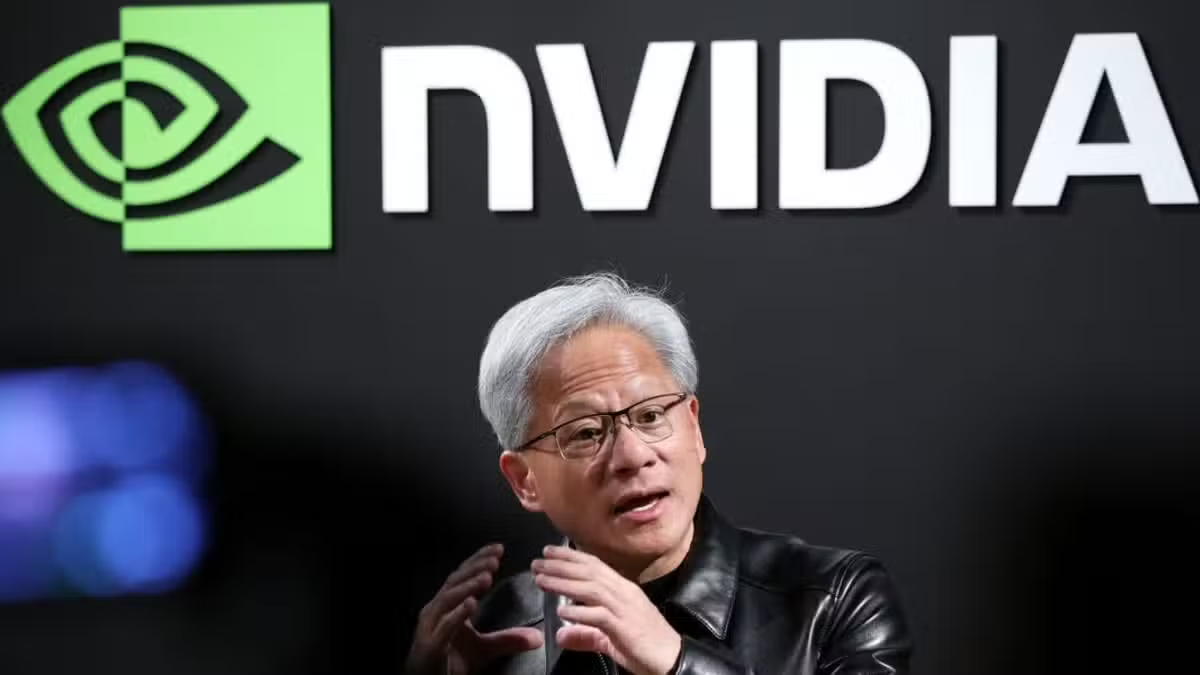
Nvidia CEO Jensen Huang has rejected concerns that artificial intelligence could cause a global catastrophe in the near future, arguing that the world is unlikely to face an AI-driven end by 2030.
Speaking to CBS Sunday Morning, Huang addressed growing public concerns about the potential risks associated with increasingly powerful artificial intelligence systems.
Huang said there is a “0% chance” that 2030 will mark the end of the world because of artificial intelligence. His comments came as debates continue over the potential benefits and risks of rapidly developing AI technologies.
“2030 is not going to be the end of the world,” Huang said, while dismissing the idea that AI would bring about such an outcome within the decade.
The Nvidia chief also criticized what he described as efforts to frighten the public with speculative scenarios about artificial intelligence. He characterized attempts to scare people over possible AI-driven catastrophes as unnecessary and irresponsible.
The comments come at a time when AI has become one of the most closely watched areas of technology. Advances in generative AI, computing power and machine learning have expanded the technology’s use across businesses, education, research and other industries.
At the same time, researchers, technology executives and other experts have raised questions about the longer-term risks associated with increasingly capable AI systems. These discussions include concerns about safety, misuse, misinformation, employment and the challenges of maintaining effective oversight.
Huang’s comments represent his position in that wider debate. As the head of Nvidia, a company that supplies graphics processors and computing infrastructure widely used for AI development, he has been a prominent figure in discussions surrounding the technology’s rapid expansion.
Nvidia’s hardware has become an important part of the infrastructure supporting modern AI applications. The company’s growth has also made Huang one of the most visible technology executives discussing the future of artificial intelligence.
The debate over AI safety remains broader than the question of whether artificial intelligence could cause a global catastrophe by 2030. Governments, researchers and technology companies continue to examine how AI systems should be developed and managed as their capabilities increase.
Huang’s latest remarks focus specifically on predictions of an imminent global catastrophe. His comments do not eliminate the broader discussion about AI risks, but instead challenge what he views as exaggerated or speculative warnings about the near-term future.
Artificial intelligence is continuing to develop at a rapid pace, with companies investing heavily in computing infrastructure and new AI models. This growth has increased both expectations about potential benefits and attention on possible risks.
For the public, the ongoing debate involves distinguishing between established effects of AI and hypothetical future scenarios. Huang’s comments add the perspective of a leading technology executive to that discussion.
The Nvidia CEO maintains that 2030 will not represent the end of the world because of AI, while broader questions about the technology’s long-term impact, safety and regulation remain subjects of continuing debate.