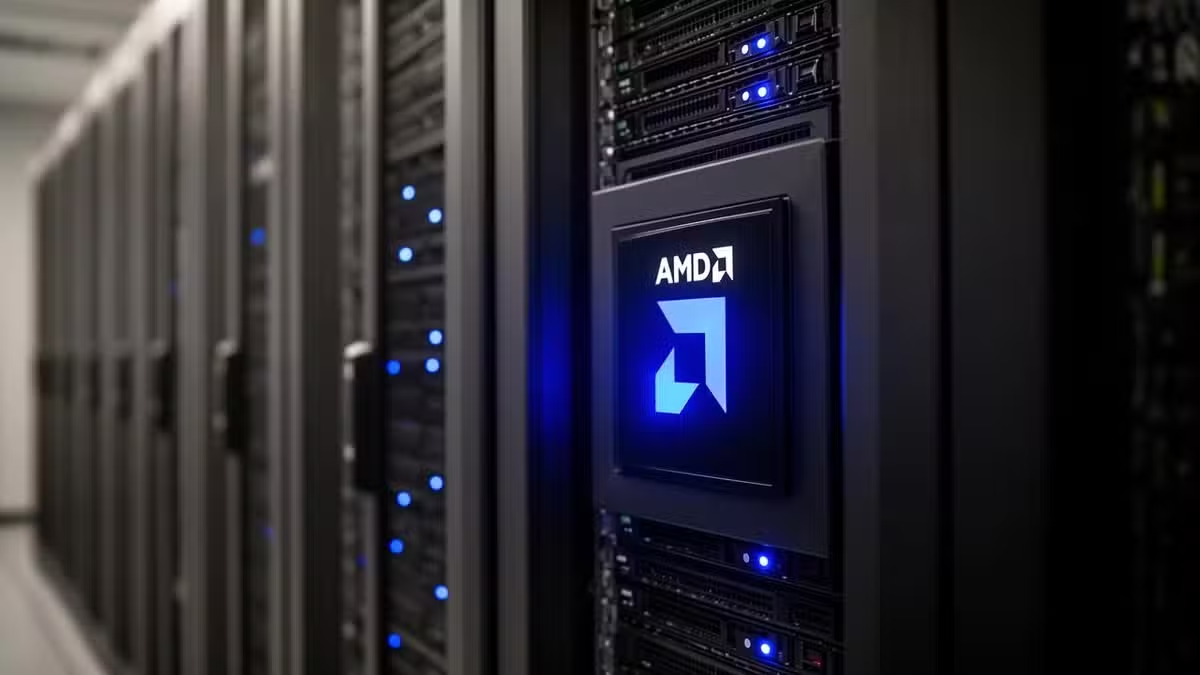
Advanced Micro Devices (AMD) is experiencing a major shift in its business landscape as artificial intelligence (AI) infrastructure demand pushes its data center division to record levels. The company’s data center segment has now become its largest revenue contributor, highlighting the growing importance of AI computing technologies in the global semiconductor industry.
AMD’s data center revenue increased 107% year over year to $6.7 billion during the second quarter of 2026, marking a record performance for the segment. The strong growth was fueled by rising demand for AI accelerators and high-performance server processors as businesses continue investing heavily in artificial intelligence infrastructure.
The data center division accounted for approximately 58% of AMD’s total quarterly revenue, compared with around 42% during the same period a year earlier. The rapid expansion reflects how AI-related technologies are reshaping the company’s overall business strategy and revenue structure.
A key driver behind this growth has been increasing demand for AMD’s Instinct AI accelerators and EPYC server processors. These products are designed to support advanced computing workloads, including artificial intelligence training, data processing, cloud services, and enterprise applications.
The global race to build AI infrastructure has created significant opportunities for semiconductor companies. As organizations seek more powerful computing systems to develop and deploy AI models, demand for advanced chips capable of handling complex workloads has increased dramatically.
AMD has strengthened its position in the AI infrastructure market through strategic partnerships and major business agreements. Collaborations with companies such as Anthropic and Core Scientific have helped expand AMD’s presence among organizations developing and operating large-scale AI computing environments.
While the data center business continues to accelerate, AMD’s gaming segment has faced challenges. Gaming revenue has declined as market conditions, consumer demand patterns, and changes in gaming hardware cycles affected sales performance.
The contrast between AMD’s booming data center operations and weaker gaming revenue reflects a broader transformation taking place across the technology industry. Companies that once depended heavily on consumer electronics markets are increasingly focusing on enterprise solutions, cloud computing, and artificial intelligence applications.
The growth of AI infrastructure has also intensified competition among major chip manufacturers. AMD continues to compete with industry rivals by developing high-performance processors and accelerators aimed at meeting the growing needs of cloud providers, technology companies, and enterprise customers.
Analysts believe AMD’s ability to expand its AI-related product portfolio will be critical to sustaining long-term growth. As businesses continue adopting artificial intelligence tools, demand for efficient and powerful computing infrastructure is expected to remain strong.
The company’s expanding data center business also reflects broader changes in global technology spending. Investments are increasingly shifting toward AI servers, data processing capabilities, and specialized computing systems rather than traditional consumer hardware.
For AMD, the latest results demonstrate the company’s successful transition toward becoming a major player in AI computing. The rapid rise of its data center division provides a new growth engine at a time when some traditional technology markets are experiencing slower demand.
The continued expansion of artificial intelligence applications is likely to shape AMD’s future priorities, with data center solutions expected to remain central to the company’s growth strategy. As AI adoption accelerates worldwide, semiconductor companies with strong infrastructure offerings are positioned to benefit from the next phase of technological development.