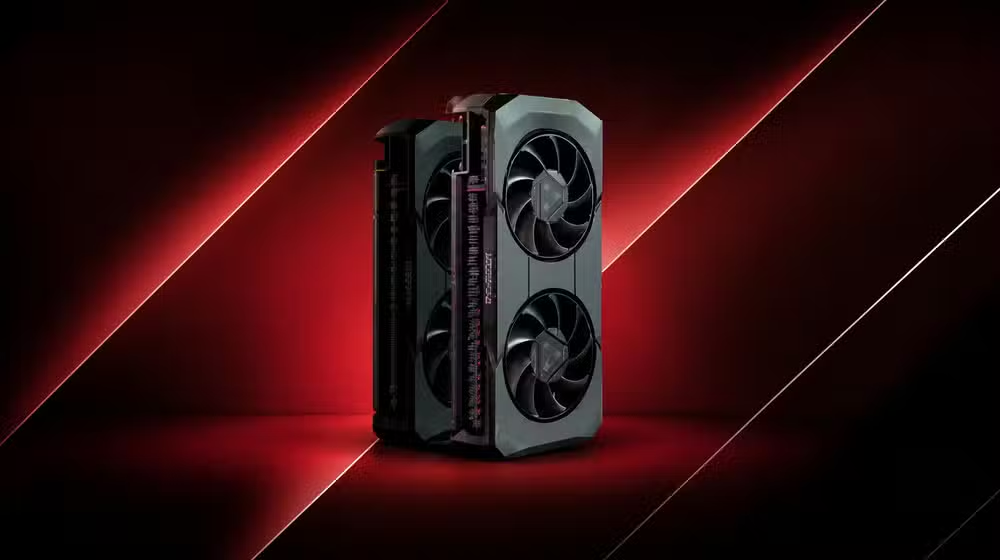
AMD has announced a major expansion for its FidelityFX Super Resolution 4 technology, bringing renewed excitement for users of older Radeon graphics cards.
The company confirmed that support for FidelityFX Super Resolution 4, commonly known as FSR 4, will begin rolling out to older Radeon GPUs starting in July 2026. The announcement was made by Jack Huynh, Senior Vice President of AMD’s Computing and Graphics division.
When FSR 4 was originally introduced, the advanced upscaling technology was restricted to the Radeon RX 9000 series based on the RDNA4 architecture. The limited availability disappointed many gamers and PC enthusiasts who were using older Radeon hardware.
With the latest update, AMD is now extending compatibility to GPUs built on the RDNA3 and RDNA3.5 architectures during the first rollout phase. The move is expected to significantly improve gaming experiences for existing Radeon users by enabling better frame rates, smoother gameplay, and enhanced image quality without requiring immediate hardware upgrades.
FSR 4 is designed to use advanced AI-powered upscaling techniques to render games at lower internal resolutions before intelligently enhancing image quality. This approach helps boost gaming performance while maintaining visual clarity, especially in graphically demanding modern titles.
The expansion of support could strengthen AMD’s position in the competitive GPU market, where features such as AI upscaling and frame generation have become increasingly important for gamers. Rival companies have already pushed similar technologies heavily in recent years, making broader support for FSR 4 a highly anticipated move within the PC gaming community.
Industry analysts believe AMD’s decision to support older graphics cards may also help extend the lifespan of existing gaming PCs at a time when GPU prices remain high in several markets. Many users continue to rely on RDNA3-based hardware, making the update particularly valuable for those seeking improved gaming performance without investing in new GPUs.
Gamers and hardware enthusiasts on social media have reacted positively to the announcement, viewing it as a consumer-friendly step that rewards long-term Radeon users. The broader rollout is also expected to encourage more game developers to integrate FSR 4 support into upcoming titles.
AMD has not yet revealed the complete list of supported graphics cards or the exact rollout timeline beyond the July launch window. However, the company indicated that compatibility expansion will continue in phases after the initial RDNA3 and RDNA3.5 rollout.
The announcement highlights AMD’s growing focus on software-driven gaming improvements and AI-enhanced graphics technologies as competition in the GPU industry continues to intensify.