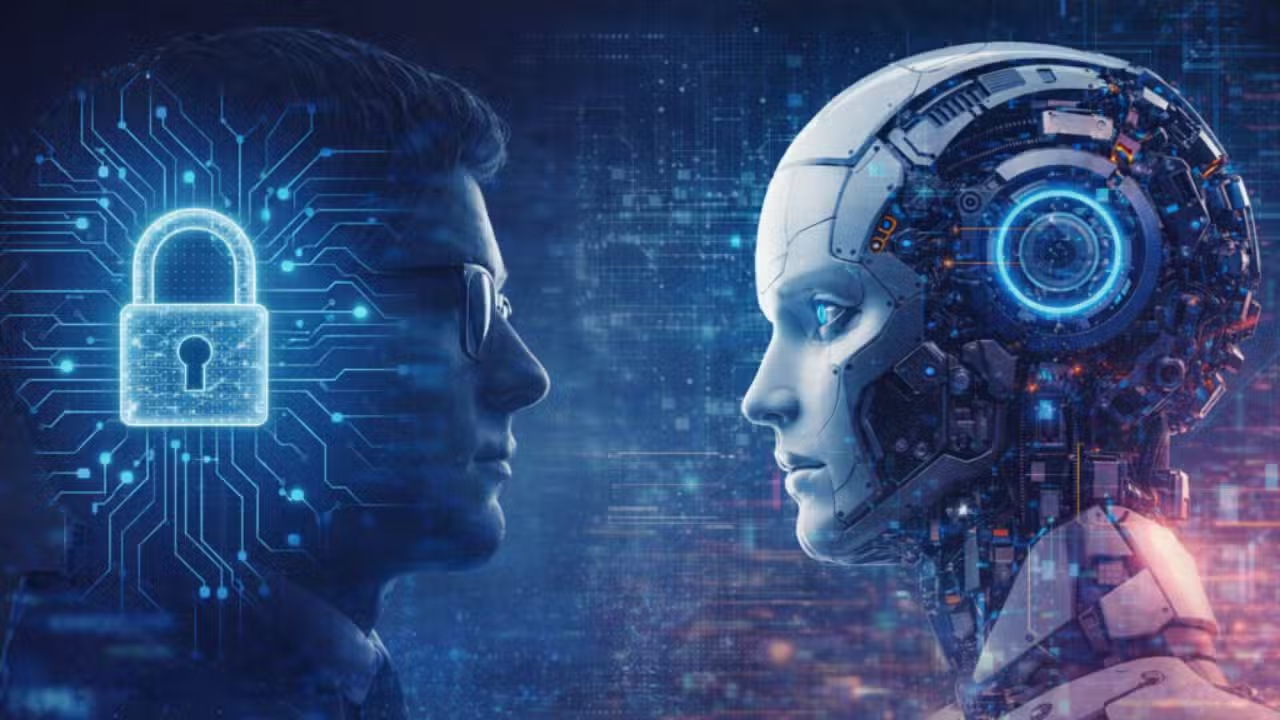
As artificial intelligence continues to transform business operations, cybersecurity risks are becoming more complex. While companies are investing in advanced security software and digital infrastructure, human decisions remain one of the most significant factors influencing their overall security.
For businesses in Pakistan and across the Middle East and Africa (MEA), protecting digital assets requires more than installing firewalls or antivirus solutions. Organisations need a comprehensive cybersecurity strategy that combines employee awareness, reliable infrastructure, continuous monitoring and professional technical support.
The rapid adoption of generative AI has created new opportunities for businesses, but it has also expanded the potential attack surface. Employees increasingly use AI assistants to prepare reports, analyse information and automate routine tasks. However, sharing confidential business information with unapproved AI platforms can expose sensitive data.
Cybercriminals are also using artificial intelligence to develop more convincing phishing messages, impersonate senior executives and carry out sophisticated social engineering attacks. As a result, traditional security practices may no longer be sufficient to address emerging threats.
Why Employee Awareness Matters in Modern Cybersecurity
Employees play a central role in protecting business information. Even organisations with advanced security systems can face serious risks when staff members are unaware of basic cybersecurity procedures.
Workplace pressure, multiple digital applications and unclear security policies can lead to mistakes. An employee might unknowingly share confidential information through an unapproved chatbot, open a fraudulent email or respond to a fake request from someone pretending to be a company executive.
A 2026 report by Business Recorder, citing a Kaspersky survey, highlighted this challenge in Pakistan. According to the findings, 8% of surveyed professionals said their organisations either had no cybersecurity rules or that they were unaware of such policies. Meanwhile, 39% considered workplace security rules excessive or not entirely appropriate.
These findings indicate that businesses need more practical approaches to cybersecurity awareness. Simply introducing company policies is not enough. Employees must understand why security procedures matter and how to apply them in their daily responsibilities.
Regular training, realistic phishing simulations and clear instructions for using approved AI tools can help reduce unnecessary risks. Organisations should also encourage employees to report suspicious activities without fear of disproportionate consequences.
Protecting Business Data in the Age of Generative AI
As generative AI becomes part of everyday business operations, organisations must establish clear rules governing its use. Companies need to determine which AI platforms employees can access, what information they can share and who is responsible for monitoring potential risks.
The challenge extends beyond preventing sensitive information from entering public AI applications. Poorly managed integrations, excessive permissions and weak identity controls can also expose internal business systems.
A strong security approach begins with understanding how employees use technology. IT departments should identify the applications operating across the organisation, determine where business information is stored and review how users access internal systems.
Businesses can strengthen protection through data classification, multifactor authentication, least-privilege access and continuous activity monitoring. Regular vendor assessments and security reviews are equally important, particularly when AI tools connect with customer databases, internal documents or operational applications.
Human verification should also remain part of important business processes. AI-generated information must be reviewed before it influences financial decisions, sensitive communications or other critical operations.
How Managed IT Services Improve Cybersecurity Resilience
Many businesses face cybersecurity challenges because maintaining effective protection requires specialised expertise, financial resources and continuous attention. Internal IT departments may struggle to manage infrastructure, monitor threats around the clock and coordinate multiple technology providers.
Managed IT services can help address these challenges by bringing infrastructure management, professional technical support and security operations together under a coordinated approach.
A reliable managed services partner can assist with infrastructure assessments, security architecture, technology deployment, system migration, proactive maintenance and service-level agreements.
Continuous monitoring is particularly important. Identifying a security weakness is only the first step. Organisations must also ensure that vulnerabilities are addressed, systems are properly configured and suspicious activities are investigated.
Managed services can provide businesses with improved infrastructure visibility and access to technical expertise without requiring them to independently maintain every specialised capability.
However, outsourcing does not mean transferring all cybersecurity responsibility to an external provider. Internal management teams must continue to oversee business risks, security policies and governance. The purpose of managed services is to strengthen internal capabilities through additional expertise and operational support.
Why Network Infrastructure and DDoS Protection Matter
Modern cybersecurity also depends on the reliability of the infrastructure supporting business operations. Cloud platforms, corporate networks, data centres, remote employees and connected devices all contribute to an increasingly interconnected digital environment.
A weakness in one part of this infrastructure can affect other systems and disrupt business activities.
Distributed Denial-of-Service (DDoS) attacks are another major concern. These attacks can overwhelm online services with excessive traffic, making websites and digital platforms inaccessible to legitimate users. For businesses that depend on uninterrupted online services, such disruptions can affect customer confidence, revenue and operational continuity.
Effective protection requires a combination of network visibility, threat detection, prevention and rapid response. Businesses must ensure that their infrastructure and security systems operate together rather than relying on isolated technology products.
Beyond Technology operates as a technology integrator in this area, connecting enterprise infrastructure, networking solutions and professional services. Its technology ecosystem includes established partners such as HPE, Nokia and Corero, supporting capabilities across infrastructure, networking and DDoS protection.
Through assessment, solution architecture, deployment, migration and ongoing infrastructure management, technology integrators can help organisations manage complex IT environments more effectively.
Choosing the Right Managed Security Partner
Selecting a managed services provider is an important decision for businesses looking to improve long-term cybersecurity and operational resilience.
Companies should evaluate potential partners based on their technical expertise, understanding of business requirements and ability to work across different technology platforms. Service-level agreements, infrastructure documentation, incident response capabilities and ongoing maintenance should also be considered.
Knowledge transfer and employee awareness are equally important. A dependable technology partner should strengthen an organisation’s internal capabilities rather than create unnecessary dependence on external support.
For businesses in Pakistan and the wider MEA region, access to local market understanding and international technology expertise can provide additional value. Organisations need partners who can balance security requirements with infrastructure availability, scalability and operational costs.
Beyond Technology’s integration approach focuses on connecting established technology ecosystems with professional services and ongoing support. This model can help enterprises address the challenges of managing complex infrastructure while preparing for future technology requirements.
Ultimately, cybersecurity in the AI era is not just about purchasing better software or introducing stricter workplace policies. It requires a coordinated effort involving employees, technology, governance and continuous monitoring.
A single human mistake, overlooked configuration or unmonitored system can create an opportunity for cybercriminals. Businesses that combine employee awareness with resilient infrastructure and an experienced managed technology partner will be better positioned to manage emerging threats and maintain operational continuity.