Humanoid robots have spent years attracting attention at technology exhibitions, but most have remained too expensive, oversized or specialized to become realistic additions to ordinary households. New machines from PrimeBOT suggest that consumer robotics may finally be moving closer to that goal.
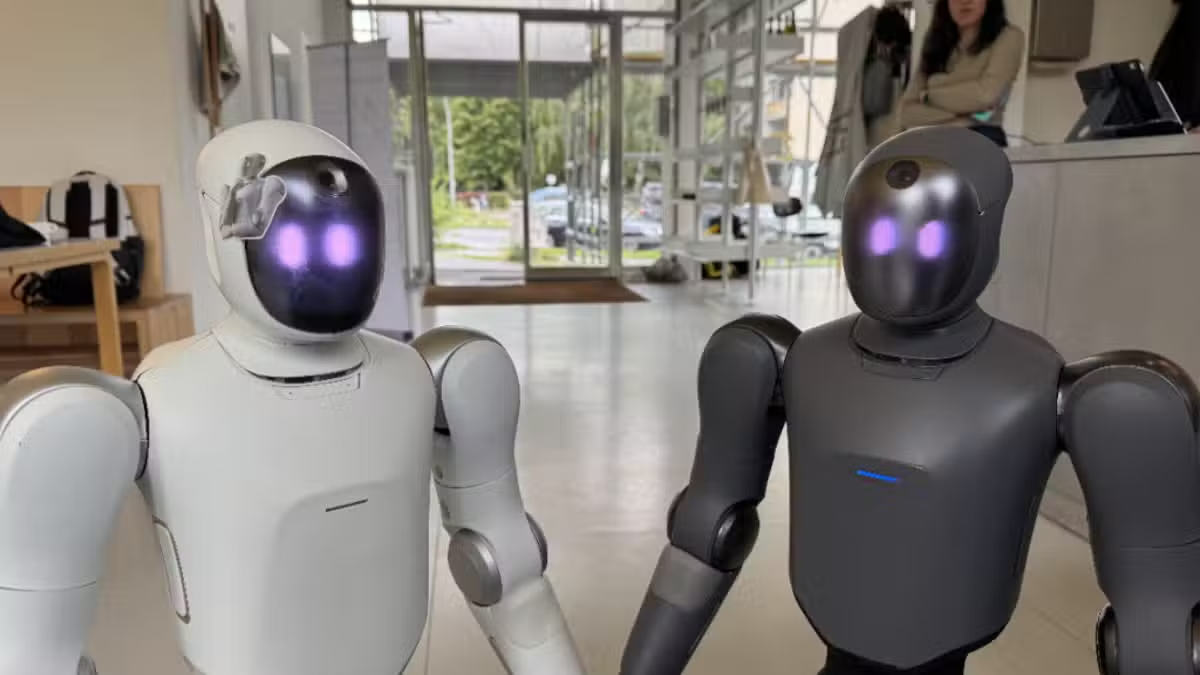
The company showcased its latest humanoid robots, the PrimeBOT Q1 and T1, at IFA 2026 in Berlin. The machines are designed with everyday household use and companionship in mind rather than primarily serving industrial or factory purposes.
Hands-on impressions from the event indicate a noticeable shift in how humanoid robots are being developed for consumers. Instead of creating machines that dominate a room, companies are increasingly focusing on smaller and more approachable robots that can interact naturally with people.
The PrimeBOT Q1 and T1 are positioned as personal assistants capable of performing a range of basic tasks around the home. Their potential functions include communicating with users, following people from one location to another and helping carry objects.
The robots are also being designed with family environments in mind. Their ability to interact with children could eventually make humanoid robots useful not only as household assistants but also as companions and educational technology.
PrimeBOT describes its concept with the phrase “Your First Personal Robot,” reflecting the company’s effort to present humanoid robotics as an everyday consumer product rather than an experimental technology reserved for laboratories or large businesses.
The approach represents an important change in the consumer robotics market. For years, humanoid robots have largely been associated with industrial automation, research laboratories and highly controlled demonstrations.
While those machines have demonstrated increasingly sophisticated movement and artificial intelligence capabilities, their size, price and complexity have limited their practicality for ordinary households.
PrimeBOT’s latest designs suggest that manufacturers are now paying greater attention to the physical realities of home environments. A household robot needs to operate around furniture, people, children and everyday objects without becoming an obstacle itself.
Size is therefore becoming an important consideration. A more compact humanoid robot could potentially move through homes more easily while requiring less storage space and creating fewer safety concerns.
Artificial intelligence is another major factor in making these machines useful. A household robot must be able to understand spoken instructions, recognize people and objects, respond to changing situations and perform tasks without requiring constant technical supervision.
The ability to follow users and carry items could also make humanoid robots useful for simple household activities. Although such capabilities remain relatively limited compared with the broader ambitions surrounding robotics, they could provide a foundation for more advanced home assistance in the future.
The development of personal humanoid robots also raises questions about affordability and reliability. For these machines to become mainstream, consumers will likely expect them to be reasonably priced, safe, dependable and easy to operate.
PrimeBOT’s presentation at IFA 2026 indicates that the industry is increasingly focused on bringing humanoid robotics beyond exhibition demonstrations and into practical consumer applications.
The technology is still developing, and it remains uncertain how quickly such robots will become common in homes. However, smaller designs, improved artificial intelligence and a stronger focus on everyday tasks could help narrow the gap between futuristic demonstrations and practical household technology.
If these trends continue, humanoid robots could eventually become another category of consumer electronics, much like smart speakers, robotic vacuum cleaners and other connected home devices.
The PrimeBOT Q1 and T1 therefore represent more than another pair of robots displayed at a major technology event. They reflect a broader attempt to make humanoid machines smaller, more approachable and useful enough to become part of everyday household life.