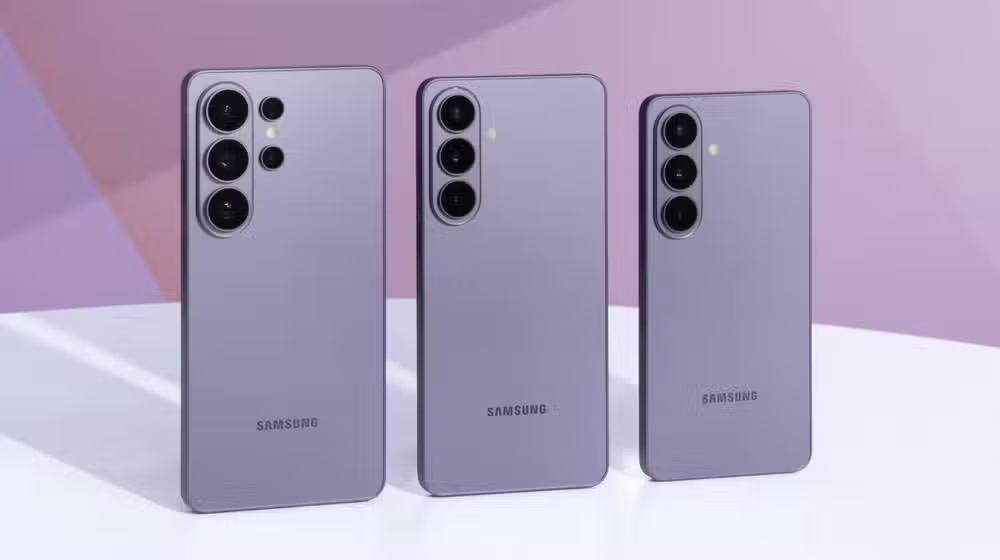
Samsung Electronics has reportedly increased production of its flagship Samsung Galaxy S26 series, responding to shifting demand patterns that exceeded early projections. The move highlights the company’s agility in adapting to market trends and consumer preferences.
According to recent reports from Korea, Samsung initially planned to manufacture around 2.4 million units in April. This included approximately 800,000 units of the standard Samsung Galaxy S26, 300,000 units of the Samsung Galaxy S26+, and a dominant 1.3 million units of the Samsung Galaxy S26 Ultra.
However, actual demand appears to have diverged from those expectations, prompting the tech giant to reassess its production mix. Industry analysts suggest that certain models, particularly the higher-end variants, may be experiencing stronger-than-anticipated consumer interest, leading to adjustments in manufacturing priorities.
The Galaxy S26 Ultra, known for its premium features and cutting-edge hardware, continues to be a key driver of sales. Consumers are increasingly gravitating toward high-performance smartphones with advanced camera systems, improved battery life, and AI-powered capabilities, areas where Samsung has consistently focused its innovation efforts.
Meanwhile, the comparatively lower production allocation for the Galaxy S26+ indicates a possible shift in buyer preference away from mid-tier flagship models. This trend aligns with broader global patterns, where customers often opt either for base models or fully loaded premium devices.
Samsung’s decision to ramp up production also reflects confidence in the continued strength of the smartphone market, despite economic uncertainties in various regions. By fine-tuning its supply strategy, the company aims to meet demand efficiently while minimizing potential shortages or excess inventory.
The development underscores the importance of real-time market data in shaping manufacturing strategies. As competition intensifies in the global smartphone sector, companies like Samsung are increasingly relying on flexible production systems to stay ahead.
With the Galaxy S26 lineup gaining traction, the coming months will be crucial in determining whether this demand surge translates into sustained sales momentum for Samsung.