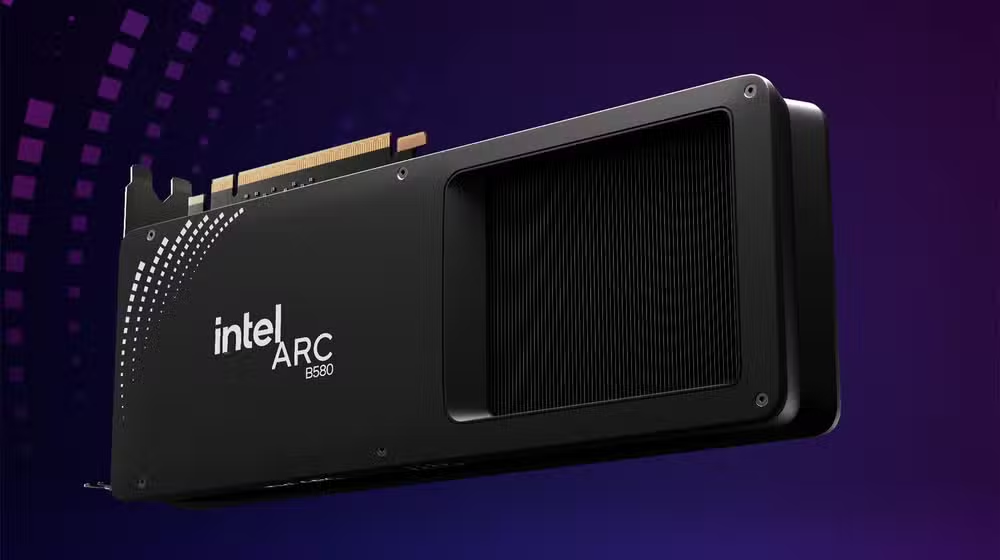
Intel has revealed a new compression technology aimed at transforming how graphics are processed on modern GPUs. The innovation focuses on reducing the size of game textures while maintaining high visual fidelity, offering a significant boost in performance and storage efficiency.
The new system is designed to function in a way similar to Nvidia’s neural texture compression, a method that leverages advanced algorithms to shrink file sizes without noticeably degrading image quality. Intel’s approach signals its growing push into AI-driven graphics optimization and next-generation gaming solutions.
One of the most notable aspects of this technology is its dual-mode capability. In its quality-focused mode, the system can compress textures to nearly one-ninth of their original size while preserving visual detail. For users seeking maximum efficiency, a more aggressive mode can reduce texture sizes by up to 18 times, making it highly beneficial for memory-constrained environments.
This breakthrough could have a major impact on gaming performance, particularly in systems with limited VRAM. By reducing the memory footprint of textures, GPUs can allocate resources more efficiently, potentially resulting in smoother gameplay and faster load times. It may also help developers create more detailed environments without significantly increasing hardware demands.
Beyond gaming, the technology could influence other graphics-intensive fields such as virtual reality, 3D rendering, and simulation. As modern applications continue to demand higher resolution assets, efficient compression solutions like this are becoming increasingly important.
Intel’s move also highlights intensifying competition in the GPU and graphics technology space. With companies racing to integrate AI-based solutions into hardware and software ecosystems, innovations like this could redefine industry standards for performance and efficiency.
As development progresses, the adoption of such compression techniques could reshape how digital content is stored, processed, and experienced, marking a significant step forward in graphics technology.