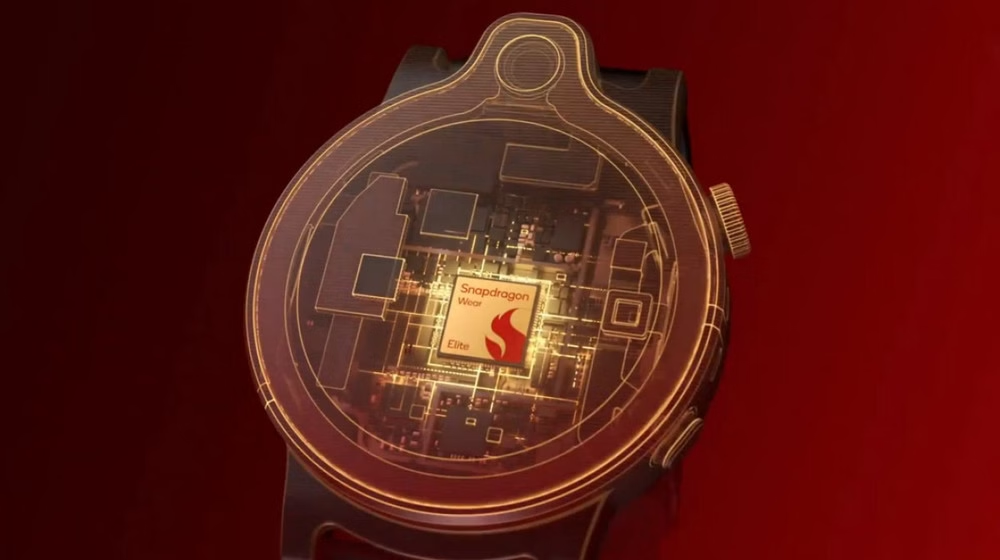
US chipmaker Qualcomm has unveiled its latest wearable processor, the Snapdragon Wear Elite, marking a major step forward in bringing artificial intelligence directly to smartwatches and compact wearable devices.
The new system-on-chip (SoC) debuts under Qualcomm’s premium “Elite” branding and, for the first time in its wearable lineup, integrates a dedicated Neural Processing Unit (NPU). This addition is expected to unlock on-device AI capabilities, reducing reliance on cloud processing and improving efficiency.
Designed for next-generation flagship smartwatches powered by Wear OS, the Snapdragon Wear Elite also targets emerging AI-driven wearables such as smart pins and pendants. The chip supports both Android and Linux platforms, broadening its compatibility across different device ecosystems.
Manufactured using an advanced 3nm process, the new chipset promises improved power efficiency and enhanced performance. The architecture features a five-core CPU configuration, including one prime core clocked at 2.1GHz and four performance cores operating at 1.9GHz. A dedicated co-processor is also included to manage background and low-power tasks efficiently.
The introduction of a built-in NPU is particularly significant. By enabling on-device AI processing, smartwatches can perform functions such as voice recognition, health data analysis, contextual notifications, and intelligent activity tracking without constant cloud connectivity. This not only enhances privacy but also improves response times and battery optimization.
Industry analysts view this development as part of a broader trend toward edge AI, where processing happens directly on the device rather than remote servers. With wearable devices becoming more sophisticated, chipset advancements like the Snapdragon Wear Elite are expected to play a crucial role in supporting AI-powered assistants, advanced fitness metrics, and real-time language translation.
The 3nm fabrication process also indicates Qualcomm’s focus on delivering high performance while maintaining compact form factors and longer battery life—key priorities in wearable technology. Smaller transistors typically translate to lower energy consumption and better thermal management, which are essential for smartwatches worn throughout the day.
By expanding its Elite branding into wearables, Qualcomm signals its intent to compete aggressively in the premium smartwatch segment. As demand for AI-enabled devices continues to grow globally, the Snapdragon Wear Elite could become a foundational platform for the next wave of intelligent wearable products.
More details about device partnerships and commercial availability are expected in the coming months as manufacturers integrate the chip into upcoming flagship wearables.