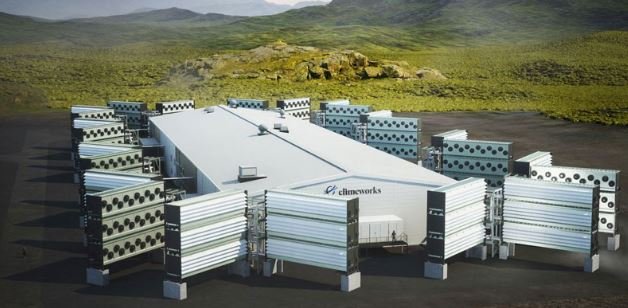
The world is failing to cut carbon emissions fast enough to avoid disastrous climate change, a dawning truth that is giving life to a technology that for years has been marginal – pulling carbon dioxide from the air.
Leading the charge, the U.S. government has offered $3.5 billion in grants to build the factories that will capture and permanently store the gas – the largest such effort globally to help halt climate change through Direct Air Capture (DAC) and expanded a tax credit to $180/tonne to bolster the burgeoning technology.
The sums involved dwarf funding available in other regions, such as Britain which has pledged up to 100 million pounds ($124 million) for DAC research and development. That compares with $12 billion in federal spending to drive demand for personal and commercial electric vehicles, Boston Consulting Group estimated.
While bids for the U.S. DAC hub funding were due on March 13, the government and some companies have yet to fully disclose details about the applications, many of which Reuters is reporting for the first time. The Energy Department expects to announce winning bids this summer.
Worsening climate change and inadequate efforts to cut emissions have thrust the issue known as carbon removal to the top of the agenda, and U.N. scientists now estimate billions of tonnes of carbon will need to be sucked out of the atmosphere annually to reach a goal of capping global warming at 1.5 degrees Celsius.
While much of that will come from natural solutions such as planting more trees or increasing the ability of soil to sequester carbon, permanent carbon removal like DAC will also be needed.
Yet the list of hurdles is long.
The biggest plant to-date is capturing only 4,000 tonnes a year and costs are high, the talent pool is fledgling and corporate buyers for the credits largely remain on the sidelines. The role of oil companies in the space has also raised eyebrows and developers must muster support for hubs from communities that have often been damaged by big energy projects.
Plus, the CO2 must be stored permanently.
The U.S. government has said it wants to back four hubs, and interviews with more than 20 state, federal, company and investor sources show at least nine applications have been filed in a first round, with two major Occidental Petroleum projects also seen as strong contenders.